
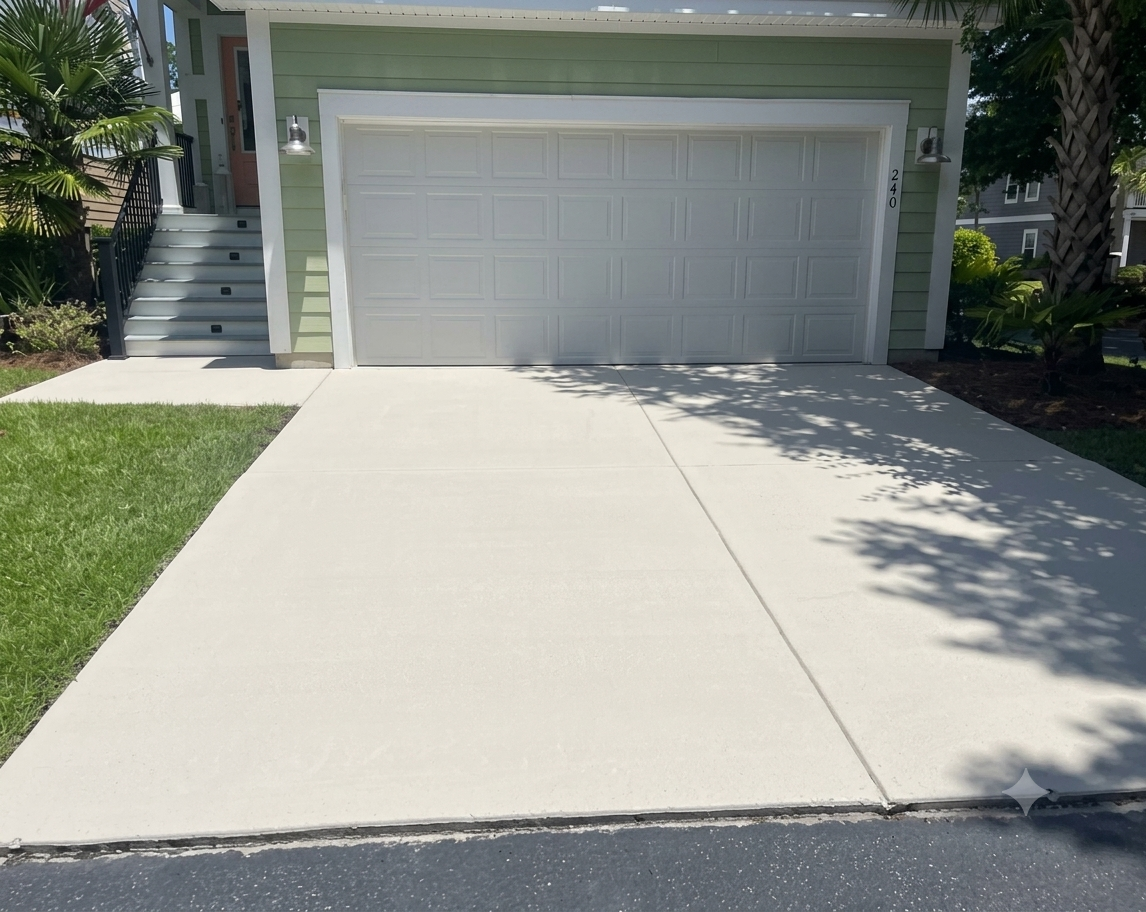
Surfaces That Withstand Daily Vehicle Loads
Driveways in the Murrells Inlet area for concrete showing cracks, weathering, or surface deterioration from years of use
Visible cracks, oil stains, and surface spalling make driveways look aged and can worsen into trip hazards or drainage problems if not addressed. Driveway repair, restoration, resurfacing, and protective treatments performed by Surface Concepts of the Carolinas LLC extend the functional life of existing concrete throughout Murrells Inlet, Myrtle Beach, Georgetown, and surrounding residential areas. Coastal weather accelerates deterioration through salt exposure and moisture cycling, so repairs focus on stopping progression of damage while improving both appearance and structural integrity.
The process addresses underlying causes of failure rather than simply covering visible symptoms. Cracks result from soil settlement, tree root intrusion, thermal expansion, or inadequate control joints, and each cause requires a different repair approach. Surface treatments include grinding away spalled material, filling cracks with elastomeric compounds, leveling sunken sections, and applying overlays or coatings that resist vehicle fluids and UV damage. Quality workmanship ensures repairs integrate with the existing slab rather than creating weak seams that fail prematurely.
Schedule an evaluation to identify which repair methods will restore durability and curb appeal to your driveway.
Why Driveway Restoration Works for Aging Concrete
Restoration begins by determining whether the driveway's base remains stable or if settlement has created voids underneath that will cause new cracks regardless of surface treatment. Stable driveways receive surface preparation through pressure washing and crack routing, followed by filling with repair mortars matched to the concrete's strength characteristics. Uneven sections are leveled using grinding equipment or polymer-modified overlays that bond to the existing surface, and oil stains are either stripped chemically or covered with pigmented resurfacing materials.
You notice a smooth, even surface without the jarring bumps or dips that existed before, and tire marks or fluid stains that had permanently discolored the concrete are no longer visible. Water sheets off the sealed surface instead of soaking in and freezing during cold snaps, which prevents new crack formation from freeze-thaw cycles. The driveway's color becomes uniform across areas that previously showed patchy fading or dark staining, and the improved appearance increases the home's overall curb appeal.
Repairs extend service life by ten to fifteen years when underlying structural issues are addressed properly, though cosmetic-only treatments over unstable concrete will fail within months. Decorative options like stamped patterns or colored finishes are available but add cost compared to standard restoration, and some homeowners prioritize function over appearance depending on budget. Heavier vehicles or frequent turning movements require thicker overlay systems than driveways serving lighter passenger cars.
What Property Owners Usually Ask
Understanding what driveway restoration involves helps homeowners make decisions about whether to repair or replace their existing concrete.
What types of damage can be repaired versus requiring replacement?
Hairline cracks, surface scaling, minor settling, and staining are all repairable. Full replacement becomes necessary when the base has washed out, when cracks are wider than a half inch and actively moving, or when more than thirty percent of the slab has failed structurally.
How do repairs improve everyday performance?
Leveling eliminates low spots where water pools and freezes, which prevents ice patches during winter. Sealed surfaces resist oil penetration and make cleaning spills easier, and crack repairs stop water from infiltrating and eroding the base material underneath.
What materials are used for driveway resurfacing in Murrells Inlet?
Polymer-modified cement overlays, epoxy crack fillers, self-leveling toppings, and penetrating sealers are all selected based on the specific damage patterns observed. Coastal applications prioritize moisture resistance and salt tolerance in material specifications.
How long before a repaired driveway can be used?
Light foot traffic is typically safe within twelve hours, but vehicle traffic should wait at least forty-eight hours to allow coatings to cure fully. Rapid-set products can shorten timelines when necessary, though standard materials generally provide better long-term durability.
Does restoration work for stamped or decorative driveways?
Repairs can match existing patterns and colors, though achieving a perfect blend depends on how much the original finish has faded. Some homeowners choose to resurface the entire driveway in a new finish rather than patching small areas that may show color variation.
Durable repair materials and quality workmanship produce results that hold up to daily use, and Surface Concepts of the Carolinas LLC tailors recommendations to the specific condition observed on your property.