
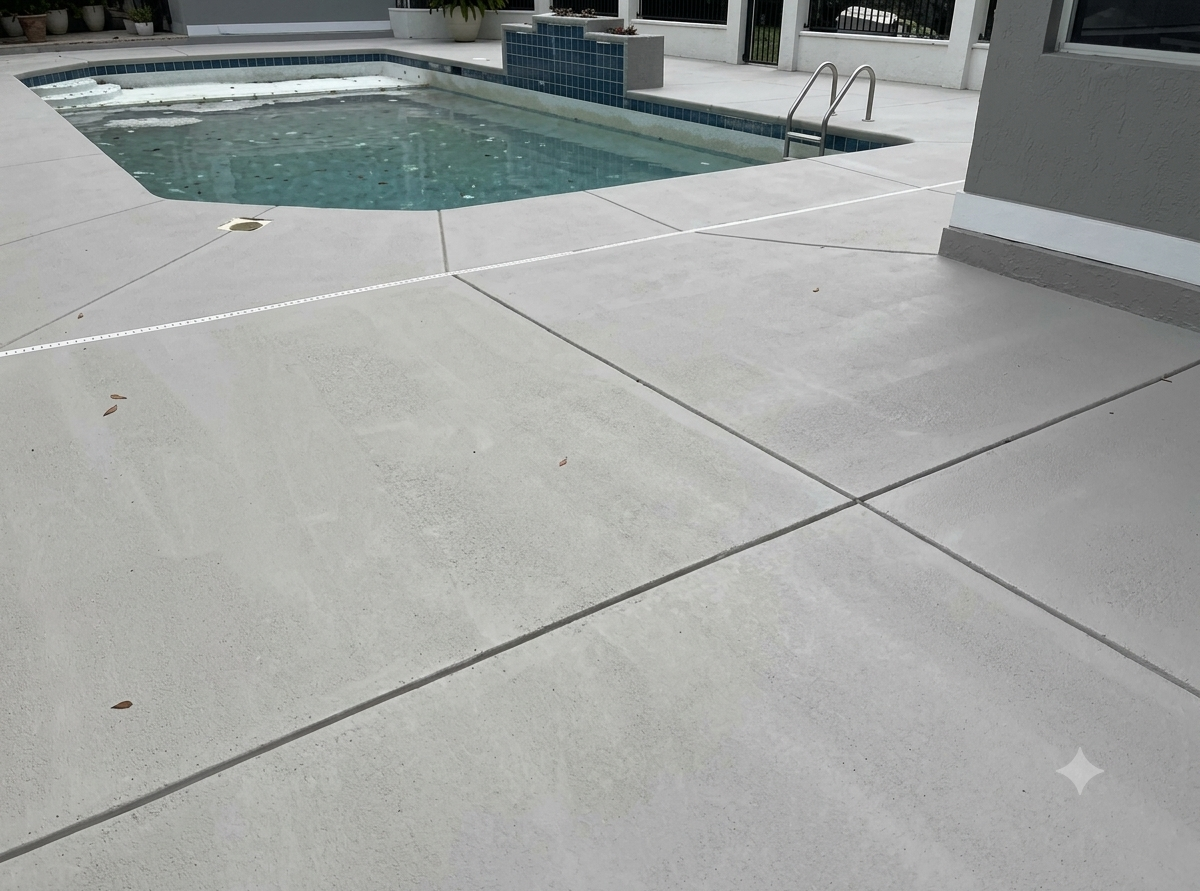
Decks Built to Handle Wet Feet and Heavy Use
Pool Decks in the Murrells Inlet area for worn surfaces that have become slippery, cracked, or visibly deteriorated
Concrete pool decks experience constant exposure to chlorinated water, barefoot traffic, UV radiation, and temperature extremes that cause surface breakdown faster than sheltered concrete. Surface Concepts of the Carolinas LLC restores residential pool areas, hotel and condominium facilities, and commercial pool decks in Murrells Inlet, North Myrtle Beach, Conway, and surrounding areas through resurfacing that improves slip resistance, repairs structural cracks, and applies decorative finishes designed to withstand coastal humidity and sunlight. Pool decks that have become rough underfoot, developed drainage problems, or show widespread surface spalling benefit from restoration that extends usable life without requiring complete demolition and replacement.
Resurfacing involves removing failed surface material, repairing cracks that allow water infiltration, and applying textured overlays or coatings that improve traction when wet. Decorative options include stamped patterns, color treatments, or exposed aggregate finishes that coordinate with surrounding landscaping while maintaining the slip resistance necessary for safety around water. Protective sealers designed for pool environments resist chlorine degradation and UV fading, which keeps the surface looking consistent over multiple seasons of use.
Request a pool deck inspection and estimate to identify which repairs will address your specific surface damage and performance concerns.
What Changes After Pool Deck Restoration
Work begins with pressure washing to remove algae, sunscreen residue, and mineral deposits that interfere with coating adhesion. Cracks wider than a hairline are routed and filled with flexible repair compounds, and low spots where water collects are leveled with self-leveling cement or ground down to match surrounding grades. Textured overlay systems are then troweled or sprayed onto the prepared surface, creating a new wear layer that bonds mechanically and chemically to the existing concrete.
After completion, you notice a uniform texture across the entire deck without the rough patches or smooth slick spots that created inconsistent footing before. Water drains evenly toward designed runoff points instead of pooling in depressions, and the surface no longer feels uncomfortably hot underfoot during midday sun due to reflective coatings or lighter color finishes. Cracks that had been widening each season are stabilized, and the sealed surface resists staining from tanning oils, sunscreen, and organic debris that previously penetrated and discolored the concrete.
Heavy foot traffic areas near pool entries and diving boards receive reinforced treatment, and decorative finishes are selected based on whether the deck sees occasional residential use or daily commercial traffic. Some projects include coping repair where the pool edge meets the deck, and others involve extending the resurfaced area to adjacent patios or walkways for visual continuity.
Common Questions About This Service
Pool deck restoration involves considerations specific to wet environments and constant exposure, and understanding the process helps property owners make informed decisions.
What causes pool decks to deteriorate faster than other concrete?
Constant splashing introduces chlorinated water that penetrates surface pores and reacts with calcium in the concrete, causing scaling and spalling. Wet-dry cycles accelerate this breakdown, and UV exposure degrades sealers faster than on shaded surfaces.
How does resurfacing improve slip resistance?
Textured overlay systems create a consistent grit pattern across the entire surface, unlike original concrete that becomes polished smooth in high-traffic areas. The texture provides traction even when wet without being uncomfortable for bare feet.
What decorative finishes withstand pool environments in Murrells Inlet?
Acrylic-modified overlays, spray textures, and polymer-based coatings all perform well in coastal humidity and resist chlorine exposure. Color options range from natural stone tones to custom pigments, and stamped patterns can mimic flagstone, slate, or tile.
When should pool deck repairs be scheduled?
Completing work during cooler months allows materials to cure under optimal conditions, and scheduling before peak swimming season ensures the deck is ready when needed. Surface temperatures above ninety degrees can cause coating application problems.
How long does a restored pool deck last?
Properly maintained resurfaced decks typically perform well for eight to twelve years before requiring recoating, depending on traffic levels and whether annual resealing is performed. High-traffic commercial decks may need attention sooner than residential installations.
Surface Concepts of the Carolinas LLC provides solutions designed for the unique demands of pool environments, and arranging an evaluation allows you to see which restoration approach will deliver the durability and appearance your property requires.