
Playing Surfaces Designed for Outdoor Use
Sport Courts in the Murrells Inlet area for recreational facilities showing surface wear and structural deterioration
Cracks radiate across tennis courts and basketball pads when the concrete base settles unevenly or thermal expansion exceeds joint capacity. Surface Concepts of the Carolinas LLC repairs and resurfaces outdoor sport courts by addressing structural defects in the concrete base, then applying durable coating systems that restore consistent ball bounce and traction. Schools, parks, homeowner associations, and private facilities throughout Murrells Inlet, Georgetown, Myrtle Beach, and surrounding areas rely on these services to extend court life without complete replacement costs.
Court repair begins with crack routing and filling to prevent water intrusion that accelerates deterioration through freeze-thaw cycles and base erosion. Surface preparation removes failed coatings and contaminants before acrylic resurfacer systems build smooth playing surfaces calibrated for specific sports. Basketball courts, tennis courts, pickleball courts, and multi-purpose recreational areas each require slightly different surface characteristics for proper ball response and player safety.
Schedule a court evaluation to assess structural conditions and determine the appropriate repair scope for your facility.
What Changes After Court Resurfacing Completes
Proper sport court restoration addresses both the concrete substrate and the playing surface coating, since structural problems will telegraph through even new finishes if left unrepaired. Joint repairs and crack stabilization stop progressive damage that worsens with each season's temperature swings and precipitation. Resurfacing materials specifically formulated for outdoor athletic use resist UV degradation and maintain flexibility to accommodate substrate movement without cracking.
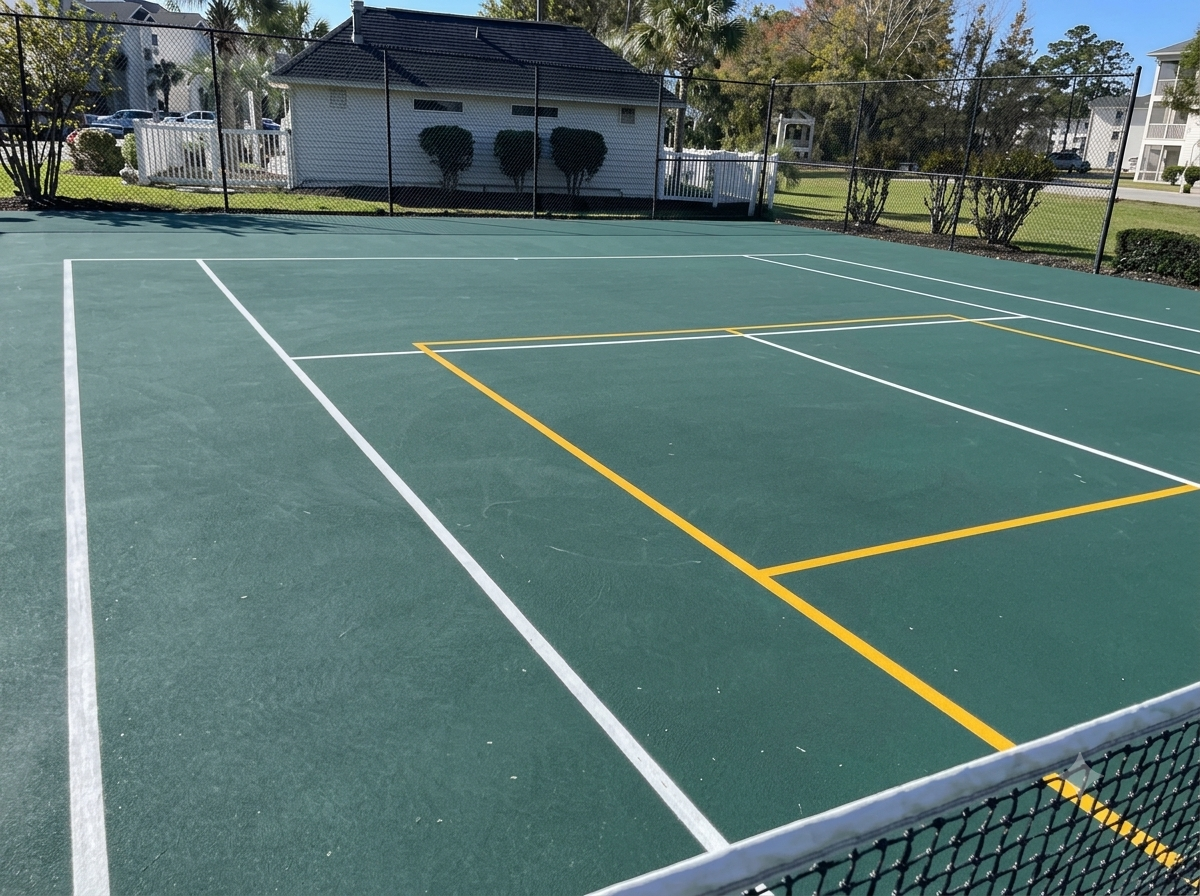
After resurfacing, you'll notice uniform color and texture across the entire court instead of the patchwork appearance created by previous spot repairs. Ball bounce becomes predictable across all areas rather than varying over cracks or depressions. The textured surface provides consistent traction that reduces slip risks during quick directional changes or when moisture is present. Line striping applied over the finish coat clearly defines boundaries for the specific sports your facility supports.
The longevity of sport court repairs depends on drainage adequacy, since standing water degrades even high-quality coatings over time. Some courts require drainage improvements or minor slope adjustments to prevent puddles from forming in low areas. Proper edge details at fencing and adjacent surfaces prevent water from undermining the court perimeter where deterioration typically begins.
Common Questions About This Service
Facility managers and property owners often need guidance on repair timing and performance expectations when evaluating court restoration projects.
What indicates a sport court needs repair rather than simple cleaning?
Surface coatings that show widespread cracking, delamination, or wear-through to bare concrete no longer provide the cushioning and ball response required for athletic use. Structural cracks wider than hairline gaps require routing and sealing before resurfacing can proceed.
How do sport court coatings differ from standard concrete paints?
Acrylic resurfacer systems contain aggregate fillers that build measurable thickness and provide the specific surface texture athletes need for safe footing. These coatings flex with substrate movement and resist abrasion from constant pivoting and impact, unlike decorative paints that quickly wear through in high-traffic areas.
When should facilities schedule court resurfacing work?
Courts experience less disruption when repairs occur during off-season periods, though scheduling depends on temperature requirements for coating application. Murrells Inlet's mild winters allow year-round work, but summer humidity can extend cure times before courts reopen for play.
What distinguishes basketball court surfaces from tennis court finishes?
Basketball courts typically use slightly smoother textures for ball handling and quick movements, while tennis surfaces need more aggressive textures for traction during lateral slides. Pickleball courts fall between these extremes, and multi-purpose courts balance the requirements when multiple sports share the same surface.
Why do some courts develop drainage problems after years of use?
Settlement around court perimeters or inadequate slope during original construction allows water to pond in low spots. Sport court repairs sometimes include minor grade corrections using resurfacer materials to direct water toward existing drains or off court edges.
Surface Concepts of the Carolinas LLC evaluates outdoor sport courts for schools, parks, homeowner associations, and private properties to recommend repairs that restore safe, attractive playing surfaces. Arrange an on-site assessment to review your court's current condition and discuss resurfacing options appropriate for your facility's use.