
Protection Against Long-Term Moisture Intrusion
Exterior Waterproofing in the Murrells Inlet area for structures vulnerable to water damage in humid coastal conditions
Moisture penetration through foundations, exterior concrete walls, and structural components leads to mold growth, rebar corrosion, and progressive material breakdown that weakens buildings over time. Surface Concepts of the Carolinas LLC applies waterproofing solutions in Murrells Inlet, Myrtle Beach, Pawley's Island, and surrounding areas designed to block water intrusion before it causes damage requiring expensive structural repairs. Coastal properties face higher moisture exposure than inland buildings due to salt-laden humidity, frequent rain, and occasional storm surge, making preventative waterproofing a practical investment in long-term property protection.
Waterproofing systems include liquid-applied membranes, cementitious coatings, and crystalline treatments that penetrate concrete pores and react with moisture to form waterproof barriers. Application locations depend on where water intrusion occurs—below-grade foundations require different products than above-grade walls or horizontal surfaces like balconies and plaza decks. Both residential and commercial properties benefit from waterproofing, particularly structures with basements, crawl spaces, or parking garages where standing water or groundwater seepage is common.
Request a waterproofing consultation to identify which areas of your property need protection and which membrane systems will perform best in those locations.
What Waterproofing Systems Actually Accomplish
The process starts with surface preparation that removes contaminants interfering with adhesion, including dirt, efflorescence, and failed coatings. Cracks and joints are repaired before waterproofing is applied, since membranes bridge small imperfections but cannot compensate for active structural movement or large gaps. Liquid membranes are rolled or sprayed onto vertical and horizontal surfaces in multiple coats, building thickness until the specified mil rating is achieved, while crystalline products are mixed and applied like thick paint or troweled on as a cement-based coating.
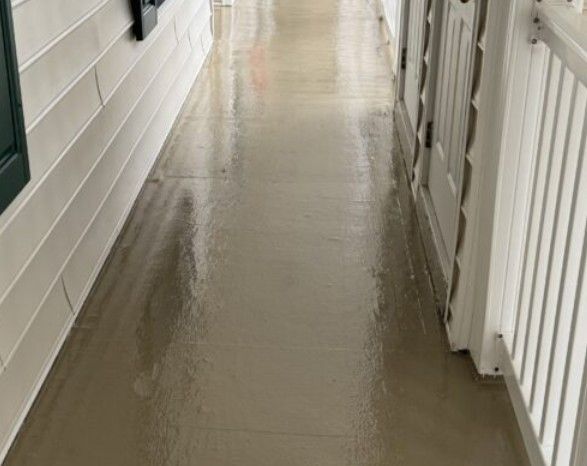
After waterproofing cures, you notice that previously damp basement walls remain dry during heavy rain, and efflorescence—the white mineral deposits that indicate moisture movement—stops appearing on foundation surfaces. Musty odors caused by trapped moisture dissipate, and interior finishes applied over waterproofed walls no longer peel or blister from humidity pushing through the substrate. The treated concrete resists freeze-thaw damage because water cannot penetrate and expand during temperature drops.
Waterproofing is preventative rather than cosmetic, so visible changes are subtle unless the structure had active leaking or water staining before treatment. Below-grade applications often include drainage system improvements to direct water away from foundations, since waterproofing works best when hydrostatic pressure from standing groundwater is minimized. Coating longevity depends on UV exposure for above-grade applications and soil chemistry for below-grade installations, with most systems performing effectively for fifteen to twenty-five years before recoating becomes necessary.
Questions Before Starting Your Project
Property owners want to understand how waterproofing protects structures and what the application process involves before committing to the work.
What signs indicate a structure needs waterproofing?
Visible water stains on interior walls, damp spots after rain, efflorescence on concrete surfaces, musty smells in basements or crawl spaces, and peeling paint or blistering finishes on walls adjacent to exterior concrete. Properties in Murrells Inlet with poor drainage or high water tables often show these symptoms even without obvious leaks.
How does waterproofing differ from sealing?
Sealers are thin penetrating or film-forming products that slow moisture absorption, while waterproofing membranes create a continuous barrier that blocks liquid water completely. Sealers work for above-grade surfaces with minor exposure, but true waterproofing is necessary for below-grade walls, foundations, and areas subject to standing water.
What preparation is required before waterproofing application?
Surfaces must be clean, sound, and free of active leaks from structural cracks. Failed coatings are removed, and any spalling or deteriorated concrete is repaired. For below-grade work, proper drainage must be established to prevent hydrostatic pressure from overwhelming the membrane.
Can waterproofing be applied to existing buildings?
Most waterproofing systems are designed for retrofit application and do not require excavation or major construction. Negative-side systems can even be applied to interior basement walls when exterior access is impossible, though positive-side exterior application is always preferred for best performance.
What materials perform best in coastal environments?
Polymer-modified cementitious coatings and elastomeric liquid membranes both resist salt exposure and remain flexible through humidity swings. Crystalline treatments work well for structures with active moisture issues because they self-seal hairline cracks that develop after application.
Surface Concepts of the Carolinas LLC selects waterproofing materials based on substrate type, exposure conditions, and whether the application is above-grade or below-grade, and arranging a property inspection allows for accurate system recommendations tailored to your specific moisture concerns.