
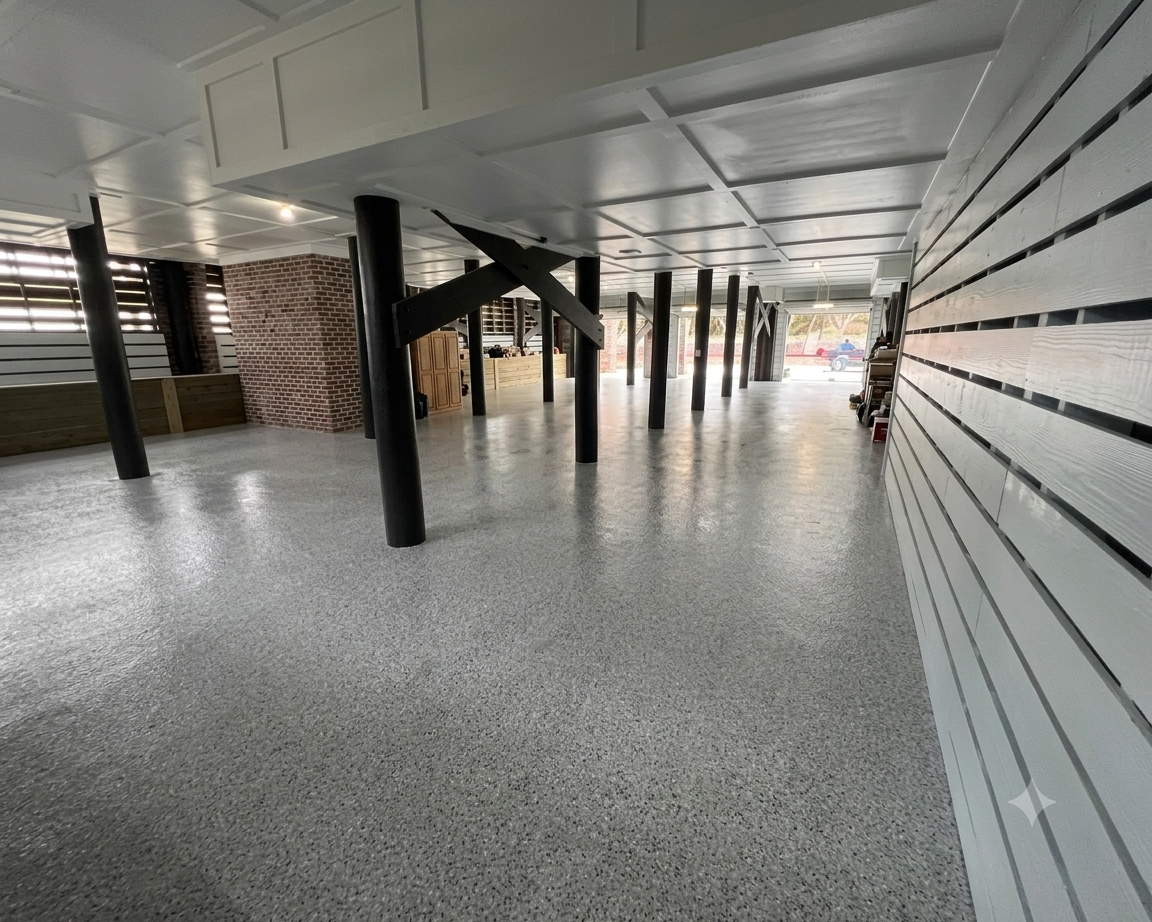
Concrete Floors Built for Decades of Traffic
Epoxy Coatings in the Murrells Inlet area for concrete surfaces requiring chemical resistance and long-term durability
Bare concrete in garages, warehouses, and commercial facilities absorbs stains from oil, chemicals, and daily spills that eventually create permanent discoloration and surface deterioration. High-performance epoxy coating systems bond directly to prepared concrete to create impermeable surfaces that shed liquids instead of absorbing them. Surface Concepts of the Carolinas LLC applies customized epoxy systems based on the specific traffic patterns and exposure conditions your floor experiences, whether in residential garage spaces or heavy-use industrial facilities.
The coating performance depends entirely on surface preparation, which involves mechanical grinding or shot blasting to open concrete pores and remove contaminants that prevent adhesion. This preparation creates the profile necessary for epoxy to chemically bond rather than simply sitting on top of the slab. Multiple coat applications build thickness that resists abrasion from vehicle tires, pallet jacks, and foot traffic while maintaining the appearance that makes epoxy-coated floors visually distinct from bare concrete.
Request an estimate detailing the coating system appropriate for your concrete floor's specific use and exposure conditions in Murrells inlet, North Myrtle Beach, Conway, and surrounding areas.
What Proper Epoxy Application Requires
Epoxy installation begins with moisture testing to confirm the concrete slab can accept coating without trapped vapor causing delamination later. Surface preparation removes existing sealers, oils, and weak surface material down to sound concrete that provides adequate tensile strength for bonding. Primer coats penetrate the prepared surface before build coats add thickness and the final topcoat provides UV stability and the desired finish appearance.
Once cured, the floor surface resists tire marks, chemical drips, and impact damage that would pit or stain bare concrete. Cleaning requires only occasional mopping since the non-porous finish prevents dirt and fluids from penetrating. The glossy or satin finish reflects light to brighten spaces that previously looked dull with gray concrete, and the coating thickness fills minor surface imperfections for a smoother appearance.
Coating systems vary in formulation based on whether the floor sees occasional vehicle traffic, constant forklift use, or exposure to specific chemicals in manufacturing or utility spaces. Commercial facilities often require faster cure formulations to minimize downtime, while residential applications can use standard systems. The coating thickness and number of coats adjust based on the expected abuse level and desired longevity.
Answers to Frequent Epoxy Flooring Questions
Customers evaluating epoxy coatings typically want to understand performance differences and what the application process involves before committing to a flooring project.
What makes epoxy coatings more durable than concrete sealers?
Epoxy creates a bonded wear surface several mils thick that takes abrasion instead of the concrete itself, while sealers only add a thin sacrificial layer. The chemical bond means the coating won't delaminate under traffic if properly applied to prepared concrete.
How does surface preparation affect coating longevity?
Mechanical preparation removes surface laitance and opens concrete pores so epoxy penetrates and locks into the substrate. Without this step, coatings adhere only to weak surface material and fail prematurely when that layer breaks loose under stress.
When can coated floors handle full traffic loads?
Most epoxy systems reach handling strength within 24 hours and full chemical resistance within seven days, though specific cure times depend on temperature and humidity. Murrells Inlet's coastal climate can extend cure times during humid summer months compared to drier conditions.
What maintenance keeps epoxy floors performing long-term?
Regular dust mopping and occasional damp mopping with pH-neutral cleaners maintains appearance without degrading the coating. The non-porous surface means spills wipe up immediately rather than requiring extraction or stain treatment like porous materials demand.
Why do some facilities choose textured epoxy finishes?
Broadcast aggregate or textured topcoats add slip resistance in areas exposed to water or oils, particularly in commercial kitchens, vehicle service bays, or outdoor covered areas where smooth finishes become hazardous when wet.
Surface Concepts of the Carolinas LLC designs epoxy coating systems for garages, warehouses, utility spaces, and commercial facilities based on the specific performance requirements each concrete floor must meet. Contact our team to schedule an evaluation and receive a coating recommendation tailored to your space.