
Surfaces That Hold Up to Coastal Living
Residential Concrete Services in the Murrells Inlet area for cracked, stained, or uneven surfaces that have deteriorated over time
Surface Concepts of the Carolinas LLC handles residential concrete repair, restoration, and resurfacing for homeowners in Murrells Inlet, Myrtle Beach, Conway, and surrounding areas whose driveways, patios, walkways, and pool decks show visible signs of aging. Coastal conditions accelerate concrete deterioration, and what begins as hairline cracks or minor surface discoloration often progresses into functional problems like uneven walking surfaces or water pooling. Each property receives a customized repair recommendation based on the specific damage patterns observed during the initial assessment.
The service addresses structural issues like cracking and settling while also improving appearance through resurfacing and protective coatings. Saltwater exposure, shifting sandy soils, and frequent rain create conditions that weaken concrete faster than in inland climates, making timely repairs essential to prevent complete surface failure. Work includes surface preparation that removes failed material, filling and leveling to correct unevenness, and applying durable finishes designed to withstand high humidity and temperature swings common to the Carolina coast.
Request a professional evaluation to identify which repair methods will restore function and appearance to your property's concrete surfaces.
What Proper Concrete Restoration Requires
Repair begins with evaluating whether the existing concrete can be restored or if sections require removal and replacement. Cracks are routed and cleaned before being filled with elastomeric compounds that flex with temperature changes rather than cracking again immediately. Uneven sections are ground down or built up with overlay systems, and stained areas are either cleaned chemically or covered with pigmented resurfacing materials that bond to the prepared substrate.
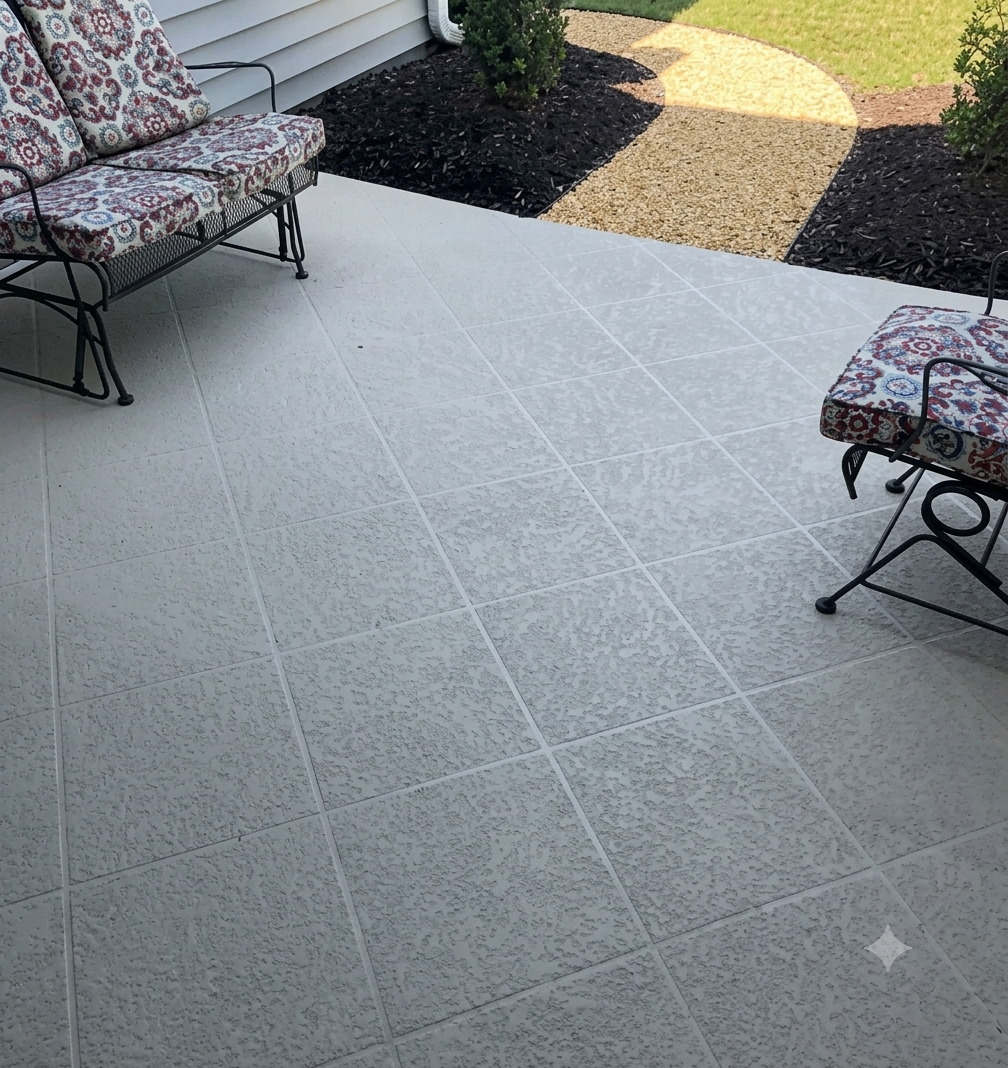
After repairs are complete, you notice level walking surfaces without trip hazards, improved drainage where water previously pooled, and uniform color across previously stained or patchy concrete. Protective sealers or coatings applied as the final step create a barrier against moisture penetration and UV damage, which slows the rate at which new cracks or discoloration develop. The restored surface looks consistent in texture and tone, and wear patterns that had been visible before the work are no longer apparent.
Some projects require only surface restoration while others need structural repair underneath, and the approach depends on how deeply the damage extends into the slab. Cosmetic finishes are applied only after underlying stability is confirmed, since decorative treatments over unstable concrete will fail prematurely. Heavy traffic areas like driveways receive different material specifications than low-traffic walkways to account for vehicle weight and turning forces.
Questions Homeowners Ask Before Starting Repairs
Concrete damage varies widely between properties, and understanding what the repair process involves helps homeowners make informed decisions about their residential surfaces.
What causes concrete to crack and deteriorate in Murrells Inlet?
Coastal humidity, salt exposure, and sandy soil settlement all contribute to cracking and surface wear. Temperature fluctuations cause expansion and contraction cycles that stress the material over time, and water that seeps into small cracks freezes during occasional winter cold snaps, widening those cracks further.
How is resurfacing different from full replacement?
Resurfacing applies a new layer over structurally sound existing concrete, which costs less and completes faster than removing and pouring a new slab. Replacement is necessary only when the underlying concrete has failed structurally or settled beyond what leveling techniques can correct.
What finishes are available for driveways and patios?
Options include smooth troweled surfaces, stamped or textured patterns, exposed aggregate, and color-integrated or stained finishes. Each finish offers different levels of slip resistance, maintenance requirements, and durability under vehicle traffic or foot traffic.
When should repairs be scheduled?
Moderate temperatures and low humidity produce the best curing conditions, so spring and fall are typically ideal. Extreme heat or cold can affect how materials set, and heavy rain during curing can damage fresh coatings.
What maintenance extends the life of repaired concrete?
Periodic resealing every few years maintains moisture protection, and cleaning stains or organic growth promptly prevents them from etching into the surface. Avoiding de-icing salts during rare freezes also prevents chemical damage to the finish layer.
Surface Concepts of the Carolinas LLC provides repair solutions tailored to the condition and use of each residential property, and scheduling an estimate allows you to see which methods will address your specific damage patterns most effectively.